VRUSHAKARMA (2026): SURVIVAL, INSTINCT, AND THE RAW EDGE OF HUMAN ENDURANCE
Vrushakarma emerges as a gripping survival-action thriller that pushes the boundaries of human endurance and cinematic intensity. Set deep within a vast and untamed wilderness, the film explores what happens when nature itself becomes both sanctuary and executioner. What begins as an expedition quickly transforms into a desperate fight for survival after an unexpected catastrophe leaves a group stranded far from civilization, with no clear path to escape.
At the heart of the narrative is a powerful performance by Prabhas, who leads the story as a lone hero forced to confront not only the brutality of the environment but also the fragility of human life. His character is defined by instinct, responsibility, and resilience, evolving from an ordinary individual into a symbol of raw survival will. Every decision he makes carries irreversible consequences, and every step forward becomes a confrontation with fear, exhaustion, and uncertainty.
The emotional depth of the film is strengthened by Sai Pallavi, whose presence adds humanity and emotional grounding to the high-stakes survival narrative. Her character reflects the psychological toll of isolation and danger, portraying both vulnerability and inner strength as the group struggles to stay alive. Alongside her, Jagapathi Babu brings authority and gravitas, embodying experience and leadership in moments where logic and survival instincts collide under pressure.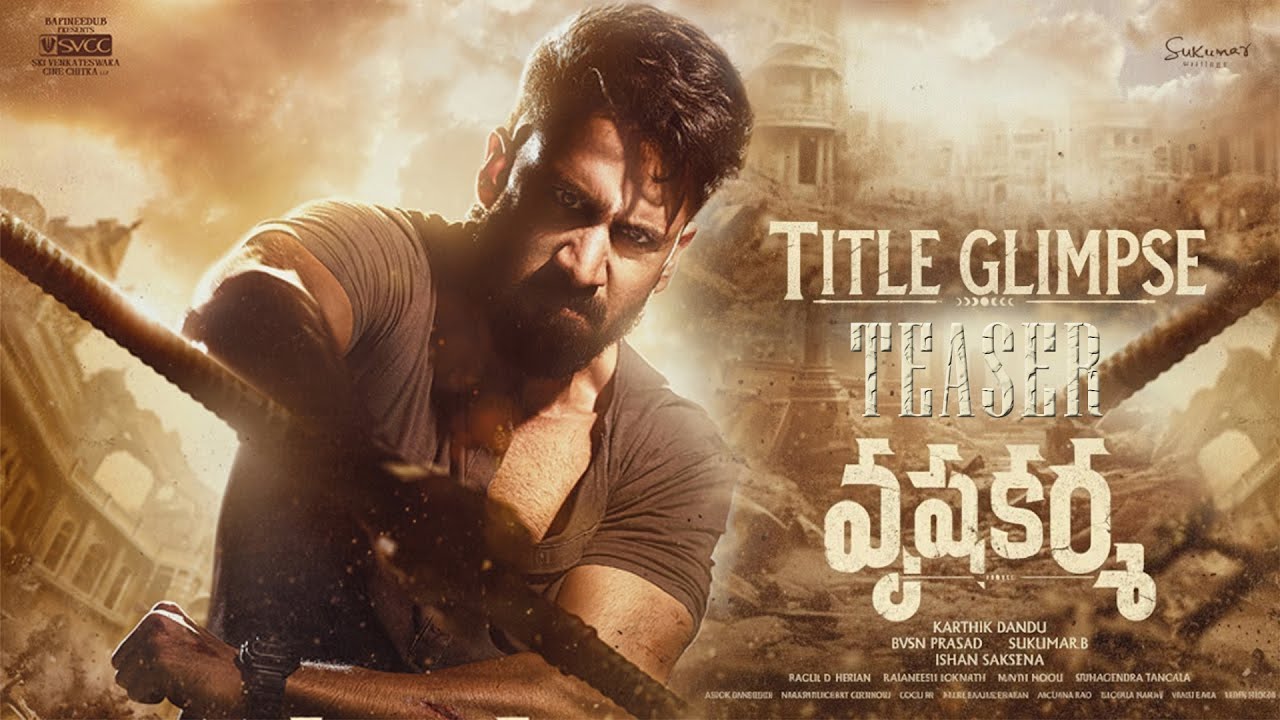
As the story unfolds, the wilderness itself becomes a living force—unpredictable, merciless, and deeply symbolic. Dense forests, collapsing terrain, and hidden dangers create an environment where every shadow feels threatening and every sound signals potential disaster. The film carefully builds tension through atmosphere rather than spectacle alone, immersing viewers in a world where survival depends on awareness, adaptation, and unity.
What sets Vrushakarma apart is its focus on the psychological transformation of its characters. Stripped of technology, comfort, and societal structure, the group is forced to rediscover primal instincts buried beneath modern life. Trust becomes fragile, fear becomes constant, and leadership is tested in ways that reveal both the best and worst aspects of human nature. The wilderness does not simply challenge their bodies—it reshapes their identities.
The central theme of the film revolves around the idea that survival is not just physical endurance, but emotional and moral resilience. Every character is pushed to a breaking point where instinct overrides reason, and choices define not only who lives, but who remains human in the aftermath. The forest, in its silence and violence, acts as both judge and mirror, reflecting the inner struggles of those trapped within it.
Visually, Vrushakarma promises an immersive cinematic experience, blending raw natural landscapes with intense action sequences that emphasize realism and emotional weight. The sound design and cinematography work together to heighten tension, making every moment feel immediate and unpredictable.
Ultimately, Vrushakarma stands as a powerful exploration of survival, instinct, and the limits of human courage. It is a story where nature is not just a backdrop, but an unrelenting force that tests humanity at its core, asking a simple but profound question: when everything is stripped away, what truly remains of us?