
THE TWILIGHT SAGA: ETERNAL DAWN (2026)
April 4, 2026

Watch movie:

*Hosted on partner site
THE TWILIGHT SAGA: ETERNAL DAWN (2026)
The world of The Twilight Saga: Eternal Dawn returns with a bold, darker vision that redefines the legacy of one of the most influential romantic fantasy franchises of the 21st century. Starring Kristen Stewart, Robert Pattinson, Taylor Lautner, and Mackenzie Foy, this latest installment moves far beyond nostalgia, delivering a gripping continuation that feels both mature and hauntingly relevant.
Set years after the fragile peace established at the end of Breaking Dawn, the story opens on a seemingly stable world where vampires and werewolves coexist in cautious harmony. However, this calm proves deceptive. Beneath the surface, something ancient and dangerous begins to stir, threatening to dismantle everything the Cullens fought to preserve. The film wastes little time in establishing its central tension: peace was never permanent—it was only a pause before something far more catastrophic.
At the heart of the narrative is Bella Swan, now fully transformed into a confident and formidable vampire. Kristen Stewart brings a renewed intensity to the role, portraying Bella not as a conflicted young woman, but as a fiercely protective mother and equal partner to Edward. Her evolution is one of the film’s strongest elements, grounding the supernatural spectacle in raw emotional stakes.
Robert Pattinson’s Edward Cullen, meanwhile, carries a quiet burden. His love for Bella and their daughter Renesmee is unwavering, but he is increasingly aware that their existence disrupts the natural order of their world. Pattinson delivers a restrained yet powerful performance, capturing Edward’s internal struggle between hope and inevitability.
The true revelation, however, is Mackenzie Foy as Renesmee. No longer a child, she emerges as a central figure whose unique nature—half-human, half-vampire—represents a new evolution that both fascinates and terrifies the supernatural community. Her presence drives the film’s central conflict, as ancient forces seek to control or eliminate what they cannot understand. Foy’s performance balances innocence with growing strength, making Renesmee both vulnerable and formidable.
Taylor Lautner’s Jacob Black also plays a crucial role, acting as both protector and bridge between worlds. His connection to Renesmee adds emotional complexity, while his leadership among the wolves reinforces the film’s theme of unity in the face of extinction. The alliance between vampires and werewolves, once unthinkable, becomes essential as a new war looms
Visually, the film embraces a darker and more atmospheric tone than its predecessors. The misty forests of Forks are no longer just a romantic backdrop but a setting filled with tension and hidden threats. The cinematography emphasizes shadows and silence, reflecting the idea that danger often arrives unseen. Action sequences are more intense and strategic, focusing less on spectacle and more on consequence.
What truly sets Eternal Dawn apart is its thematic depth. The story explores the cost of immortality, the burden of power, and the idea that love—while powerful—is not always enough to overcome destiny. The narrative challenges the characters in ways that feel irreversible, forcing them to confront sacrifices that redefine their relationships and their future.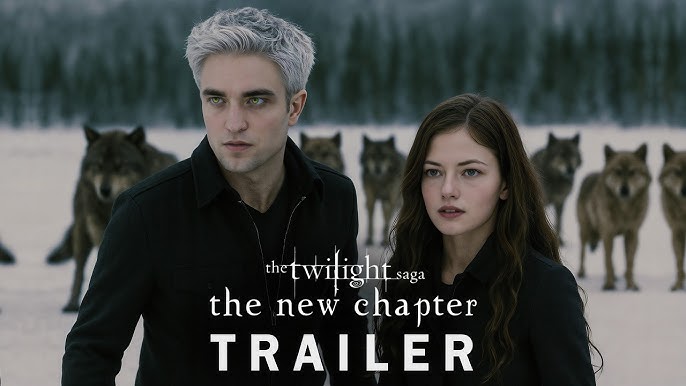
The film’s pacing is deliberate, allowing emotional moments to resonate while steadily building toward a climactic confrontation that feels both inevitable and devastating. Unlike earlier entries, which leaned heavily on romance, this installment strikes a careful balance between action, drama, and philosophical reflection.
Ultimately, The Twilight Saga: Eternal Dawn succeeds in transforming a beloved series into something more mature and emotionally complex. It honors its roots while pushing its characters into uncharted territory, offering a continuation that feels necessary rather than nostalgic.
With a compelling narrative, strong performances, and a willingness to embrace darker themes, this film stands as a powerful new chapter in the saga. It reminds audiences that eternity is not a gift without consequence—and that even the strongest love can be tested when the future itself is at stake.