
PK 2
March 25, 2026

Watch movie:

*Hosted on partner site
PK 2 (2026): A Return to Innocence in a World That Refuses to Question Itself
In a cinematic landscape increasingly driven by spectacle and formula, PK 2 (2026) arrives with a very different ambition—to challenge, to provoke, and most importantly, to question. Starring Aamir Khan, Anushka Sharma, and Ranbir Kapoor, the film revisits one of modern Indian cinema’s most beloved and unconventional characters: an alien outsider whose innocence becomes a mirror reflecting humanity’s contradictions.
The original story introduced audiences to a being unburdened by societal conditioning, someone who approached human customs with genuine curiosity rather than blind acceptance. PK 2 expands on that foundation, bringing the character back to Earth at a time when the world has only grown more complex, divided, and, in many ways, more resistant to introspection. His return is not just a narrative continuation—it is a renewed opportunity to examine the structures people take for granted.
Aamir Khan once again embodies the titular character with a balance of simplicity and depth. His portrayal avoids exaggeration, instead leaning into subtle expressions and childlike sincerity that make PK’s questions feel disarming rather than confrontational. Through his eyes, ordinary practices begin to appear strange, even illogical, forcing both the characters within the story and the audience watching it to reconsider long-held beliefs.
Anushka Sharma’s role provides a crucial emotional anchor. As someone who understands PK’s perspective yet remains rooted in human experience, her character bridges two worlds—one defined by logic and the other by faith. Their dynamic allows the film to explore complex themes without losing its emotional accessibility. Meanwhile, Ranbir Kapoor’s inclusion introduces a fresh layer to the narrative, potentially expanding the story’s philosophical scope while adding new energy and unpredictability.
At its heart, PK 2 continues to explore themes of faith, identity, and truth, but it does so with an evolved lens. Rather than repeating the same arguments, the sequel delves deeper into how belief systems adapt—or resist adaptation—in a rapidly changing world. It raises uncomfortable questions about the line between devotion and manipulation, sincerity and performance, truth and convenience. Importantly, the film does not claim to have definitive answers. Instead, it invites viewers to sit with the questions, to engage with them on a personal level.
Humor remains one of the film’s most powerful tools. Much like its predecessor, PK 2 uses comedy not as an escape but as a means of confrontation. Laughter becomes a gateway to reflection, allowing difficult ideas to be presented in a way that feels approachable rather than alienating. This balance between entertainment and critique is where the film finds its strongest voice.
Visually and structurally, the film is expected to maintain a grounded aesthetic, focusing more on narrative and character than on grand visual effects. This restraint works in its favor, keeping the audience’s attention on the ideas being explored rather than on spectacle. The simplicity of its presentation mirrors the simplicity of its central character—a reminder that clarity often comes from stripping away excess.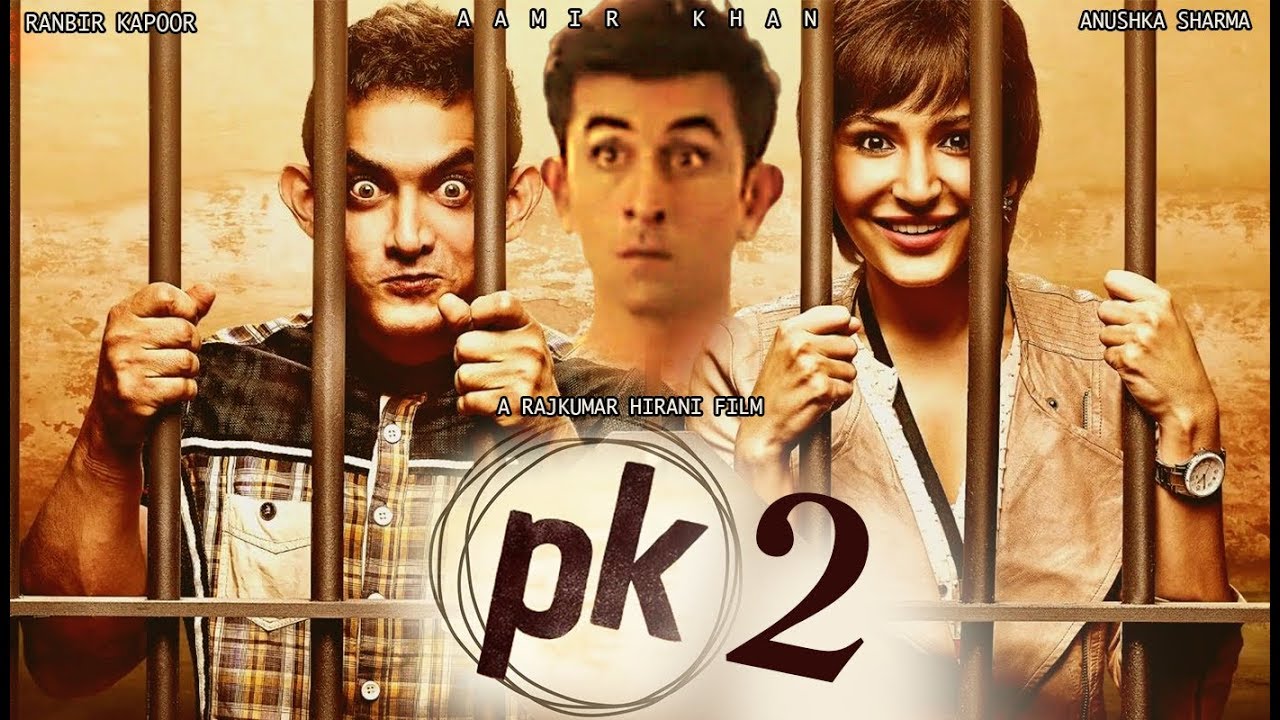
Ultimately, PK 2 stands as a rare kind of sequel—one that seeks not just to continue a story, but to deepen its impact. It challenges viewers to look beyond routine, to question the unquestioned, and to rediscover the value of curiosity in a world that often discourages it.