
SHAITAAN
February 8, 2026
Watch movie:

*Hosted on partner site
SHAITAAN
— When Evil Doesn’t Come From Hell, but From Human Control
Shaitaan is not a conventional horror film. It doesn’t rely on cheap jump scares or graphic imagery to frighten its audience. Instead, it digs into one of humanity’s deepest fears: the loss of control, the terror of watching someone you love slip away while you are powerless to stop it.
Rooted in psychological manipulation and dark occult influence, Shaitaan presents a world where evil doesn’t scream or reveal itself openly. It whispers. It observes. And slowly, it takes possession of the mind.
A NORMAL FAMILY, A NIGHTMARE UNLEASHED
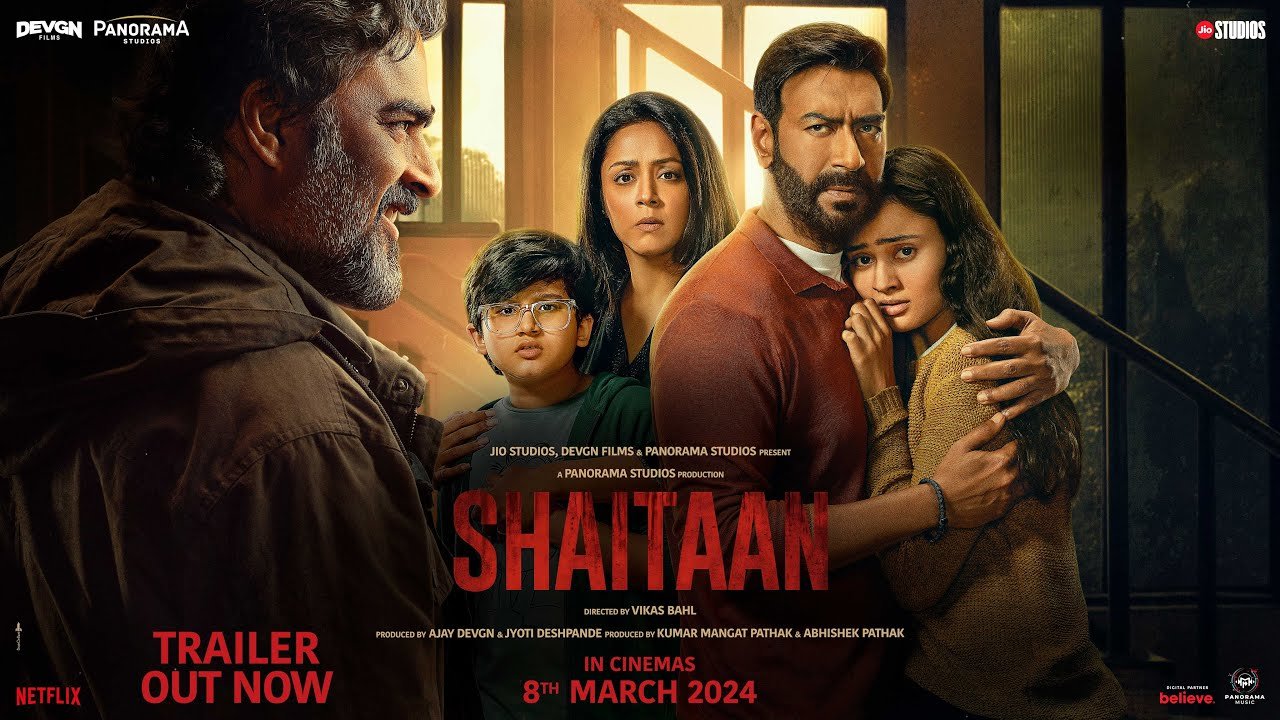
At the heart of the film is a seemingly ordinary, loving family built on trust and emotional security. Their peaceful life shatters when a mysterious stranger enters their world. He brings no weapons and uses no immediate violence. Instead, through words, subtle commands, and invisible rules, he begins to control their young daughter’s mind — and with her, the entire household descends into an inescapable nightmare.
What makes Shaitaan truly disturbing is how plausible it feels. There are no demons rising from the ground, no supernatural spectacle that feels distant from reality. The horror lies in the realization that this evil could exist anywhere, hidden behind a calm smile and a soft voice.
AJAY DEVGN — A FATHER PUSHED TO HIS LIMITS
Ajay Devgn delivers one of his most restrained and emotionally powerful performances. This is not an action hero or a fearless savior. He is a father — flawed, frightened, and desperate — watching his child slip beyond his reach. When brute force becomes useless, he must fight with intellect, patience, and unimaginable sacrifice.
His portrayal captures the agony of helplessness, the slow-burning rage, and the unconditional love of a parent pushed to the edge. It’s a performance that doesn’t demand attention — it earns it.
R. MADHAVAN — EVIL IN ITS CALMEST FORM
R. Madhavan’s antagonist is the embodiment of quiet terror. He doesn’t raise his voice. He doesn’t rush. His power comes from confidence, psychological insight, and absolute control. Every word he speaks feels measured, intentional, and deeply unsettling.
This is a villain who doesn’t need violence to dominate. His presence alone creates dread, proving that true evil doesn’t need to announce itself.
PSYCHOLOGICAL HORROR THAT SLOWLY TIGHTENS ITS GRIP
Shaitaan takes a slow-burn approach, carefully building tension instead of overwhelming the viewer. The fear creeps in gradually, scene by scene, until the atmosphere becomes suffocating. The minimalist sound design, cold lighting, and confined spaces enhance the feeling of entrapment.
There are no easy releases here — only a growing sense of dread that lingers long after the film ends.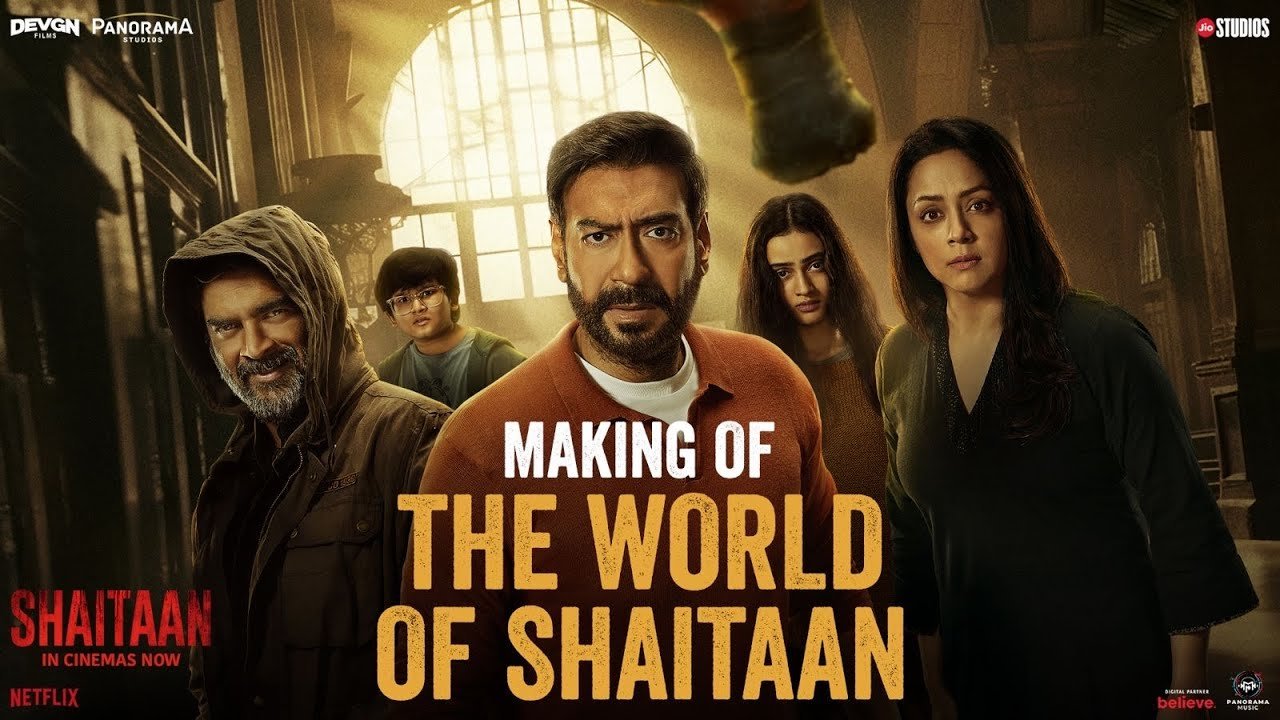
A DARK BUT NECESSARY MESSAGE
Beyond its horror elements, Shaitaan confronts uncomfortable truths:
- How fragile is free will?
- Where does faith end and manipulation begin?
- And how far would a parent go to save their child?
The film leaves the audience disturbed not by what they see, but by what they recognize.
FINAL VERDICT
Shaitaan stands as a rare example of psychological horror done with maturity and restraint. It is not a film designed for casual thrills. It is meant to unsettle, provoke thought, and stay with you.
Cold. Claustrophobic. Uncomfortably real.
Shaitaan doesn’t scream to scare you.
It whispers — and follows you into the dark.